
Modern game engines unify hardware variability behind a lean, performance-first layer. They orchestrate rendering, physics, input, and AI with tight budgets and deterministic profiling. Unreal, Unity, and Godot trade throughput for tooling and clarity, yet all rely on modular subsystems and cross-platform pipelines. As AI, ray tracing, and cloud play push streaming and state sync, the challenge shifts to budgeting resources without breaking the frame. The path forward hints at deeper optimizations and new bottlenecks that await examination.
What Modern Game Engines Do for You
Modern game engines provide a foundational platform that abstracts hardware variability while exposing tight control over performance-critical systems. They orchestrate rendering, physics, and input pipelines with minimal overhead, enabling scalable profiling and deterministic behavior.
AI assisted tooling accelerates asset pipelines and debugging, while cloud native workflows support CI, testing, and deployment across platforms. Freedom-focused, these systems empower developers to optimize, iterate, and leverage modular components.
Unreal, Unity, Godot: Quick Compared
Unreal, Unity, and Godot each implement distinct design philosophies for game development, offering trade-offs in performance, portability, and tooling.
In a systems-oriented frame, engines expose lean render paths, tight memory control, and modular subsystems.
The comparison drives choice: Unreal vs Unity emphasizes raw throughput and ecosystem, while Godot vs Unreal respects scripting simplicity and lighter toolchains.
Key Features Guiding Engine Choice
What factors most influence engine choice when performance, memory, and tooling intersect at the system edge? Core criteria prioritize lean pipelines, low overhead, and deterministic budgets. Procedural generation accelerates content without bloating memory, while cross platform tooling reduces porting toil. Stability, debug visibility, and modular subsystems enable gritty optimization, predictable frame times, and freedom to tailor engines to hostile, performance-critical environments.
The Future: AI, Ray Tracing, and Cloud Play Sessions
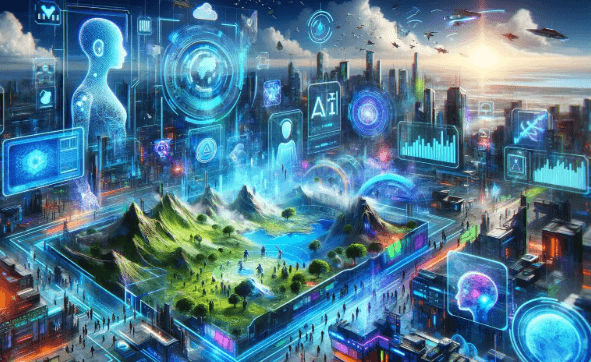
The near horizon for game engines centers on capabilities that push compute, memory, and latency boundaries: AI-driven world generation, real-time ray tracing, and cloud-play orchestration.
Systems-oriented, the future emphasizes ai optimization for procedural fidelity, deterministic performance, and low-latency pipelines.
Cloud rendering tightens framerates across devices, enabling scalable workloads; engines must optimize streaming, state synchronization, and resource budgeting without sacrificing freedom or control.
See also: Game Development Technologies
Frequently Asked Questions
How Do Engines Handle Cross-Platform Deployment Beyond PC and Consoles?
Cross platform tooling enables deployment strategies across devices, with engine licensing adapting per platform. Live service scalability, mid project migration, and mobile power optimization demand lean abstractions, while freedom-seeking developers leverage modular systems for efficient cross-device runtime.
Which Licenses Impact Indie Developers Versus Large Studios?
Independently, royalty licensing and source code access shape outcomes: indie developers face tighter constraints and favorable terms, while large studios leverage broader access. The engine’s licensing model governs costs, reuse rights, and potential profit carveouts, impacting scalability and freedom.
Can Engines Optimize for Mobile Battery Life Effectively?
Engine energy efficiency is feasible; engines can implement battery aware optimizations, reducing redraws and CPU/GPU bursts. They optimize thermal frames, memory pacing, and wake locks, enabling lean battery usage while preserving freedom for performance-focused developers.
How Do Engines Support Live Service and Multiplayer Scalability?
Live service frameworks scale via distributed state and authoritative servers, optimizing latency and reliability; multiplayer scalability hinges on partitioning, replication, and cross platform deployment, while licenses impact deployment speed, barriers switching engines, and mobile battery life considerations amid freedom-driven optimization.
What Are the Barriers to Switching Engines Mid-Project?
Switching engines introduces significant project risk, as deep toolchain, asset pipelines, and scripting boundaries must be remapped; teams face compatibility, retraining, and performance gaps, increasing budget strain and technical debt while preserving freedom to optimize core systems.
Conclusion
In sum, modern game engines quietly shoulder the heaviest lifting, delivering reliable throughput with disciplined budgets and measured abstractions. They nudge hardware toward predictable behavior, smoothing spiky workloads through careful partitioning and profiling—without courting drama. While Unreal, Unity, and Godot offer different temperaments, the core discipline remains: lean loops, deterministic cycles, and scalable subsystems. For studios, the choice is not hype but fit, aligning tools, pipelines, and budgets to the target frame of mind.